
CHF 0.00 0

Panier

No products in the cart.

Actitudes

Why it's important

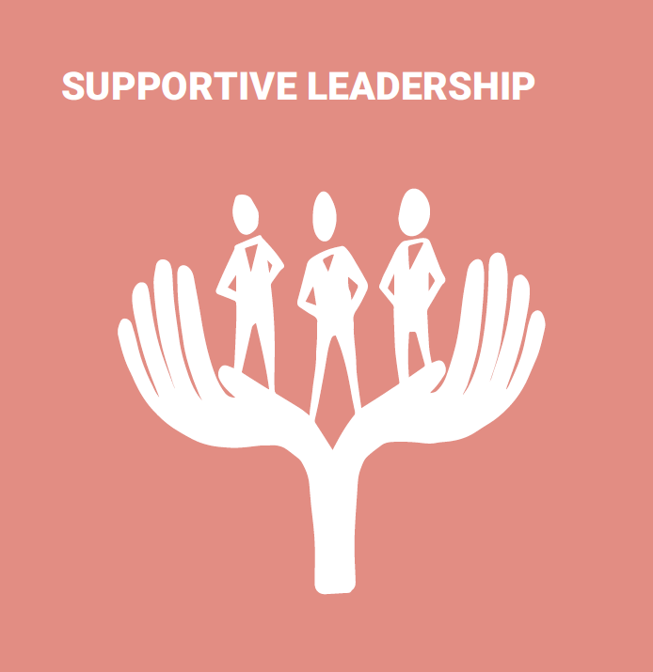
Supportive leadership is, from my point of view, a condition sine qua non for the creation of sustainable teams.
A supportive leader is distinguished by their willingness to focus on what is important for people's well-being. They smooth out obstacles to allow them to rise to a higher level. Their ability to support the group – without positioning themselves as a «savior» – is a fundamental criterion for success. As George Kohlrieser points out when he talks about secure base leadership, leaders should strive to seek, throughout the development process, the right mix between care (support) and dare (stimulating challenge). This is how to ensure that teams give their best and operate in the sustainable performance quadrant of my impact model.

Some ideas for developing this dimension with your team

Things to do

  • Encourage a culture of supportive leadership throughout the organization, for example via mentoring and coaching, or 360° feedback for management. Management must be available to people, providing them with help and support when needed. Mutual assistance must also prevail at the top.
  • Ask board members and leaders to model supportive leadership – and to practice it. Leaders must make themselves available and seek to empower the entire organization. Their vocation is to help people improve, until they are able to accomplish their work with minimal supervision. This means that leaders must behave as facilitators, and not as «saviors».
  • Create an environment where people can take ownership and try new things. A supportive hierarchy is capable of tolerating mistakes: it does not blame teams or publicly criticize their errors. On the contrary, it shows responsibility, striving to maintain good relationships and encourage open dialogue within the organization. People must feel safe to be able to learn from failures.
  • Give leaders opportunities to train, practice, and develop their emotional intelligence, compassion, empathy (care for others), and their ability to constructively challenge teams (boldness). Leadership and HR should establish guidelines for supportive leadership (description of expected behaviors) and explain to teams how coaching and mentoring add value to the organization.
  • Foster a two-way dialogue allowing teams to express their needs, particularly regarding the expected support. Provide clear instructions on how to behave to meet team needs. Seek to create a climate of trust and a sense of loyalty by diligently and consistently following up on agreed-upon actions – and also by clearly saying «no» to expectations that cannot be met.

What to avoid

  • Applying dominant leadership, leading to excessive pressure and a lack of support for teams. At worst, leaders adopt abusive behaviors, denigrate those around them, use foul language, make threats, or even coercion. All of this generates a climate of intimidation and harassment. This must not be tolerated in any way at any level of the organization.
  • Showing disinterest in supporting and guiding people. Leaders sometimes exert a bad influence on teams due to their indifferent attitude and/or their excessive concern for their own interests. Conversely, a supportive hierarchy takes time for people. It readily offers them help and encourages them to develop their careers, thus empowering them to reveal their full potential.
  • Not being interested in feedback. In the long term, reluctance to listen or respond leads to many problems: dissatisfaction, resentment, staff burnout... Unfortunately, leaders sometimes lack receptiveness and openness, attaching too much importance to their personal views.
  • Adopting an elitist and unfair attitude by offering support only to certain hand-picked individuals. Mentoring must be communicated and accessible fairly throughout the organization. This presupposes the existence of a strong ethical foundation at the leadership level. Leaders must uphold values such as impartiality, social justice, empathy, etc.
  • Wanting to please and say yes to all needs expressed by the team, without firmly committing to it. There are leaders who do not offer true support and who otherwise do not care about following up on actions. In the worst cases, they pretend to support their team but expose it to criticism as soon as they are under pressure.

Share this page

Explore our articles on this topic

Explore other factors

Let's talk together

Leave us your contact details and we will get back to you as soon as possible.