
CHF 0.00 0

Panier

No products in the cart.

Actitudes

Why it's important

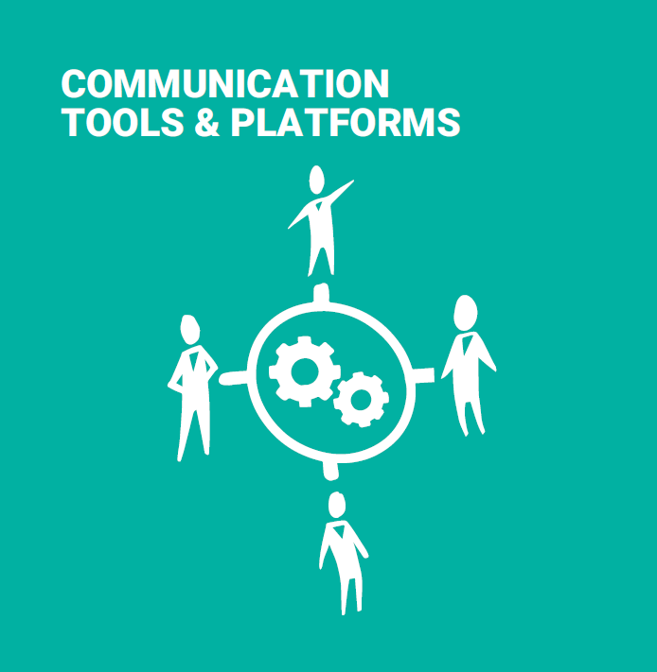
Rapid communication ensures good coordination and optimal performance for a team. A sure way to promote it is to instill trust. It is advisable to combine in-person meetings and virtual sessions, the latter option being accessible to almost all organizations, practically anywhere in the world. It is important to carefully consider the most appropriate means for regular internal and external communications. Equally important, if not more so: maintaining close contact with customers. In this regard, new information and communication technologies (ICTs), and social media in particular, offer interesting prospects.


Some ideas for developing this dimension with your team

Things to do

  • Implement an «open door» policy» by letting the entire team know that they can approach you to ask questions, propose ideas, or discuss a problem. This will strengthen trust. It will encourage early reporting of potential malfunctions, allowing your team to react more quickly, as they will not have to wait for the next meeting to make a decision.
  • Organize communication training. A potentially very effective measure. Make sure it goes beyond basic skills. Depending on the circumstances, you can also offer teams the opportunity to develop their presentation skills, for example.
  • Use the communication methods that suit you best. When projects inherently involve remote collaborative work, videoconferencing is undoubtedly appropriate. Everyone will be able to easily follow the progress of the file. However, for interactive workshops including brainstorming or process mapping sessions, for example, physical meetings are still recommended.
  • Use a collaborative platform to improve internal coordination. Most of them use the cloud. And for good reason. Transparency, smooth tracking, better overview: the benefits are worth considering. Furthermore, the use of a unified and streamlined digital solution significantly reduces the volume of emails.
  • Go digital and leverage social media. Value the know-how of digital natives (millennials) to benefit the entire group. For example, you can launch reverse mentoring initiatives, where younger colleagues advise older ones. This is a particularly interesting option for everything related to digital communication tools.

What to avoid

  • A lack of transparency. If you give the impression of hiding something, it risks eroding the trust you have established with your team. Of course, some information must be treated confidentially (think of sensitive data...). But for the rest, you must be open and authentic, inviting people to reciprocate. This is the best attitude for cultivating good relationships with all your stakeholders.
  • Being behind in communication technologies. Teams that lag in this area sometimes suffer from suboptimal access to updated information, leading to lower efficiency and, above all, slowdowns. This can also lead them to make decisions that are not the most opportune. Currently, most project management software offers a mobile application.
  • Using too many communication platforms. A scattering would risk generating confusion and disorder. For your communication to be productive, limit the number of your platforms. Choose them carefully, determining when and why you will use them. Finally, make sure they effectively enable teams to collaborate better.
  • Not setting guidelines. If your communication is too abundant or your intentions are not perceptible, you risk «making a lot of noise for nothing». The communication style that suits one person may not be to the liking of another. Therefore, establish clear guidelines for the team to determine what is acceptable and reasonably expected in terms of response times, working hours, and the use of ICTs, for example.
  • A team disconnection. Over-reliance on digital tools could stifle dialogue and communication. Make time and space for your team to engage in real relational and transactional communication.

Share this page

Explore our articles on this topic

Explore other factors

Let's talk together

Leave us your contact details and we will get back to you as soon as possible.