
This article transcribes the content provided by Frédéric Meuwly in the video "Fundamentals and inspirational trends of Sustainable Teams" from the online training "Sustainable teams and the 18 key factors".
In this article, we will address the fundamentals on which the method of sustainable teams as well as the main concepts that inspired the approach.
The concept of'sustainable team is mainly inspired by three areas. The first is that of the circular or regenerative economy.
1. The circular or regenerative economy
In the circular or regenerative economy, we oppose the ' 'take-make-waste' approach of the linear economy. In a sustainable team, people are not considered simply as resources used to manufacture products or provide services, but as full-fledged human beings.
We will therefore seek to support and develop these individuals throughout their entire life cycle within the organization and even beyond. For sustainable teams, we can also talk about'energy efficiency and zero waste to ensure optimal functioning regarding both human aspects and performance-related aspects.
Individuals sustainable teams will thus avoid wasting their resources as might be the case in other teams with, for example:
- Too much inertia in decision-making
- Internal conflicts that are destructive
- Or poor coordination due to a lack of clarity regarding roles and responsibilities within the team.
The logic of the compound effect
To prevent this, sustainable teams will work according to the logic of the'compound effect (Compound Effect) and seek to regularly and consistently implement continuous improvements which will have in the long term some multiplied impacts not only for the team, but also for the'entire ecosystem of which they are a part.
CUMULATIVE EFFECT
Smart Choices
+ Consistency
+ Time
= Radical long-term difference
2. Salutogenesis and organizational health
The second notion is that of salutogenesis and organizational health.
If we consider an organism or a living system, we observe that its good health results from the subtle balance — or homeostasis — between numerous parameters that are linked to each other and are therefore interdependent. Applying the same logic, we can see that the good health of a team or an organization is holistic, multifactorial, and systemic in nature.

Individuals 18 key factors to develop sustainable teams are inspired by the concept of salutogenesis developed by medical sociologist Aaron Antonovsky, which is an approach focusing on factors promoting physical, mental, and social health and well-being, rather than studying the causes of diseases, which is pathogenesis.
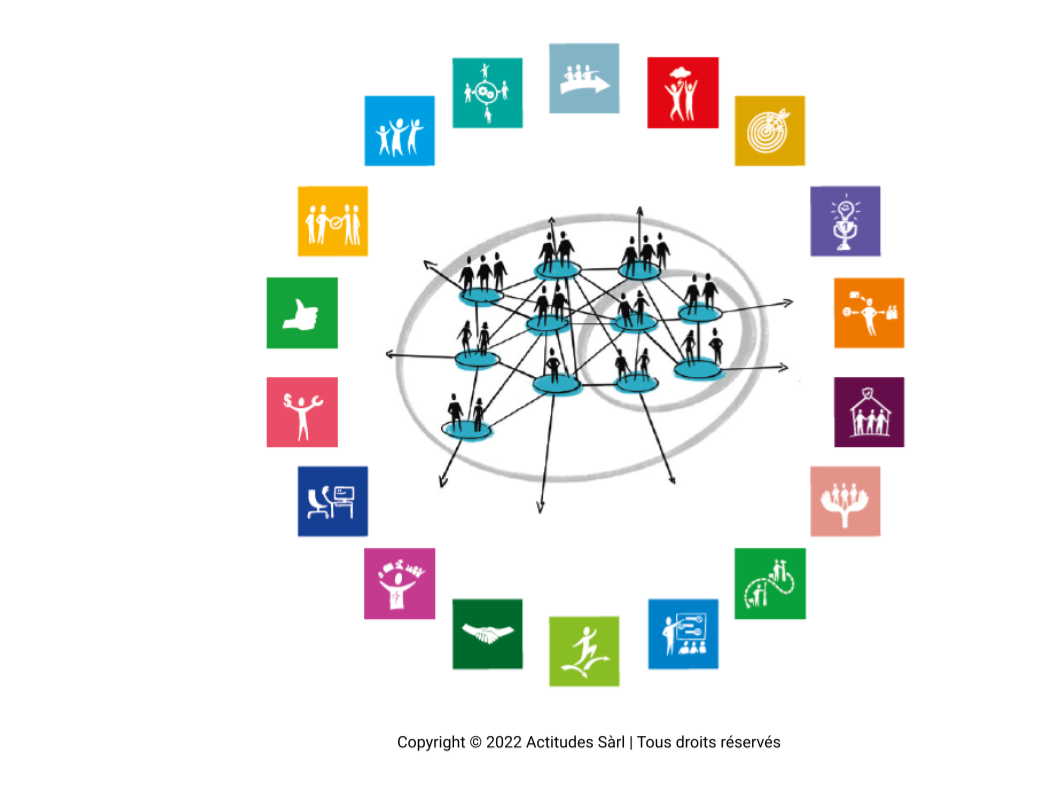
By working with the 18 key factors, teams are able to strengthen their resources, contributing to their sustained health and good performance.
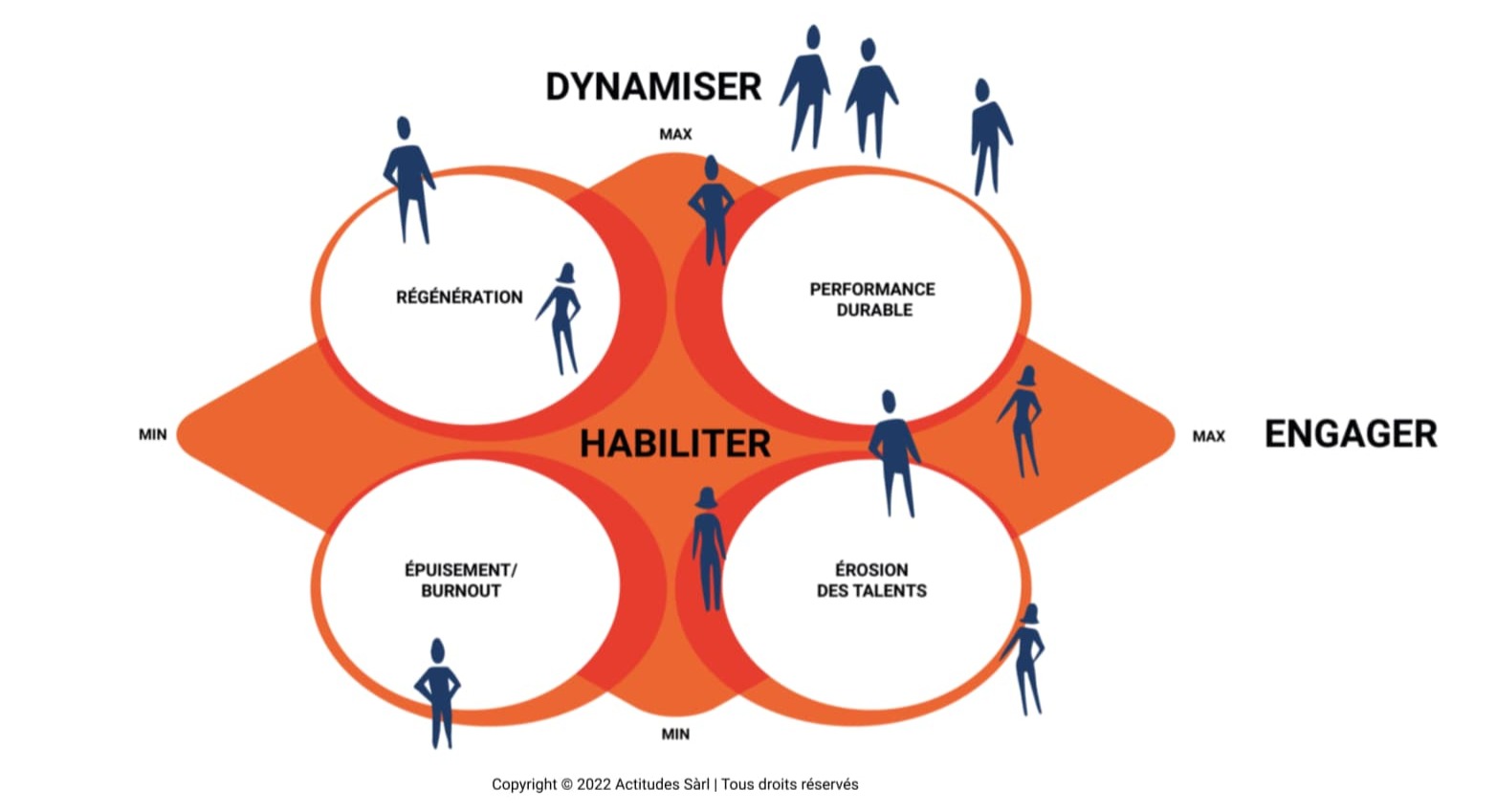
Sustainable performance zone vs erosion zone
This proactive management will allow the team to be brought into a sustainable performance zone where people feel fully empowered, engaged, and energized by their work. This requires creating a team culture that values the concept of regeneration as an integral part of sustainable performance in order to avoid over-engagement and exhaustion that characterize talent erosion and burnout zones.
3. Impact models
The third point comes from impact models for workplace health management and employee engagement.
The impact model that we use to highlight the cost-benefit impact related to the development of sustainable teams is inspired by similar impact models used in health management and employee engagement and motivation management.
I used these tools to demonstrate the existence of a positive link between team development and the benefit that can be expected on several levels, for example in terms of:
- Better sales performance
- Greater customer satisfaction
- Decrease in sick leave
- Lower staff turnover
- Lower recruitment costs
- Improvement of brand image and organizational attractiveness.
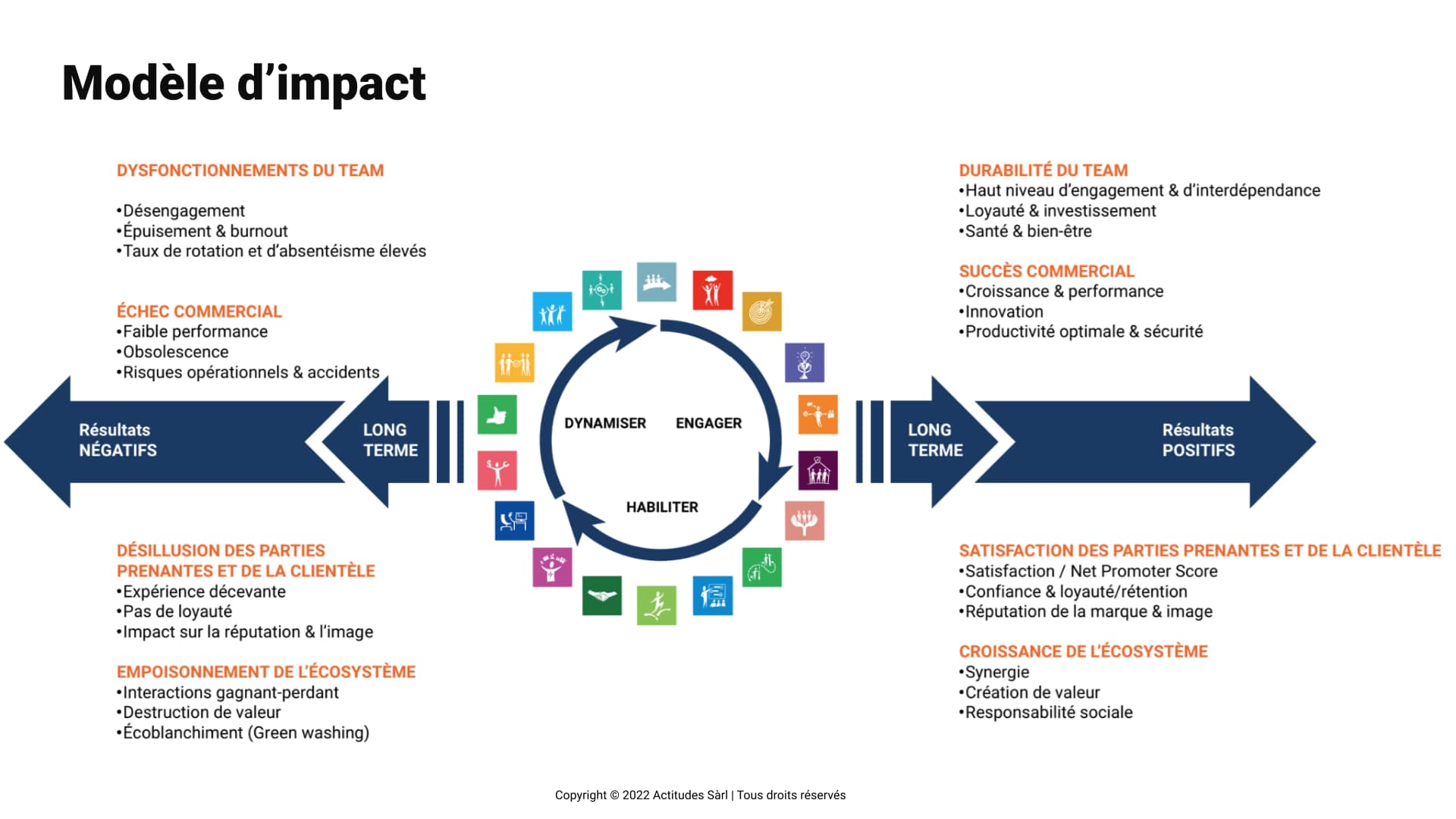
Similarly, we can highlight what I call the costs of inaction, i.e., the negative impacts that can be expected if one chooses not to invest in team development and waits for symptoms of dysfunction to become apparent before acting.
Genesis of the 18 key factors
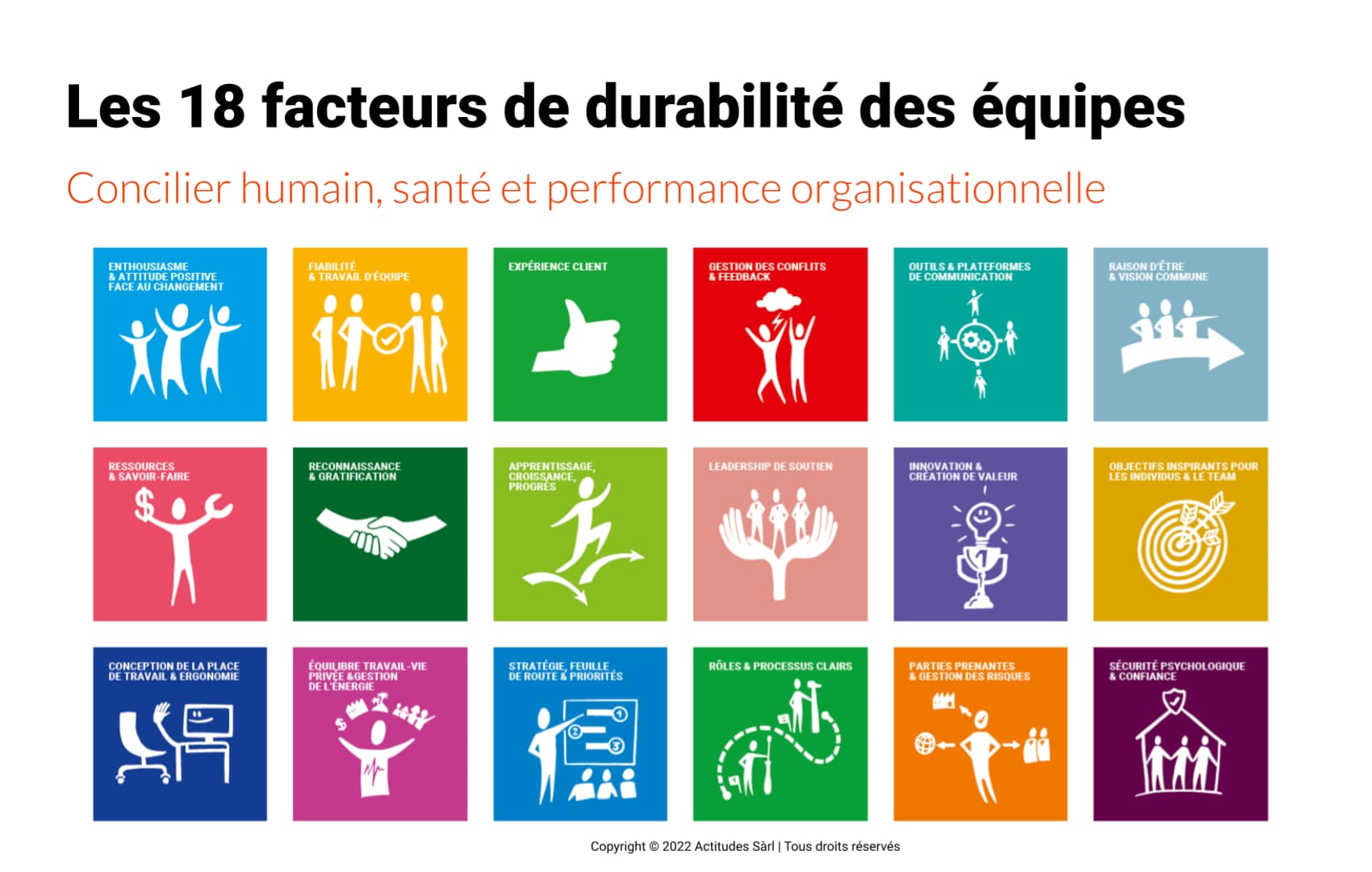
Around 2015, at the time I was working to identify the key factors for developing sustainable teams and seeking to demonstrate the cause-and-effect link, the United Nations (UN) published a catalog bringing together the 17 sustainable development goals, the SDGs. This catalog is a set of interdependent socio-ecological measures to create a better, lasting world.
And I had noticed interesting parallels between these goals and my philosophy of sustainable teams. So, by digging a little deeper, it was thanks to this UN catalog that I was able to design a similar approach, but on a smaller scale, for the creation of more sustainable teams and organizations. This is what gave birth to the 18 key factors that constitute the essence of our approach to sustainable teams.
To access the Complete online training program "Sustainable Teams and the 18 Factors" - from which this video is taken - it's here:
