

On Monday, February 9, our last MeetUp during which we had the chance to listen and share with Nicolas Ecknauer, Service Manager at Romande Énergie, who took the time to tell us how he implements the methodology of sustainable teams and the 18 key factors available to support the Managers of his Department for the development of their teams, in a long-term approach, which he started two years ago.
Here are some key elements of his sharing:
- To move from implicit human development to an assumed, shared, and structured management, it was crucial for Nicolas to be able to offer a clear framework and visibility on team development practices to his managers and team leaders. This is why he wanted to rely on the’sustainable teams approach and the 18 key factors.
- Through his approach, the sustainable teams and the 18 key factors have become a common language for his managers and team leaders as well as the 90 employees of his technical department at Romande Energie. Allowing managers to rely on concrete and pragmatic levers in managing their teams. Also enabling inter-team synergies within this same department as well as alignment between team leaders and managers.
- The idea is that the 18 factors become a reflex framework for managing problems that arise: "With which factor(s) can we link this problem?" >> So that managers and employees can use the appropriate factor(s) to dissect and analyze the problem in question and rely on them to develop solutions.
- Nicolas initiated this approach gradually with a desire to sustain it over time. In a first phase, he began by introducing the approach and key factors to his leadership team, composed of team leaders and managers from his department; who were able to discuss their mutual perception of these factors and appropriate them over several participatory sessions.
- In a second phase, Nicolas and his leadership team wanted to involve the rest of the department (90+ employees) and begin an analysis of the teams' status with a TeamScan followed by a participatory analysis of the results by the employees and managers themselves during a participatory workshop.
- This large workshop allowed for working on and analyzing the Teamscan results, comparing perceptions, and starting to work on collective avenues for the department as well as avenues for each team.
- To fully embed the approach, each team was invited to establish its own action plan in 2-3 concrete steps to develop the priority key factors within its team.
- Some concrete examples of elements that emerged and were worked on during this process:
- Work on roles and responsibilities as well as the scope of positions and their potential overlaps
- Review of 2 important processes that were problematic
- Development of Supportive Leadership
- Need for conflict management training > training could be requested at the organizational level.
- The ability to prioritize items as a team
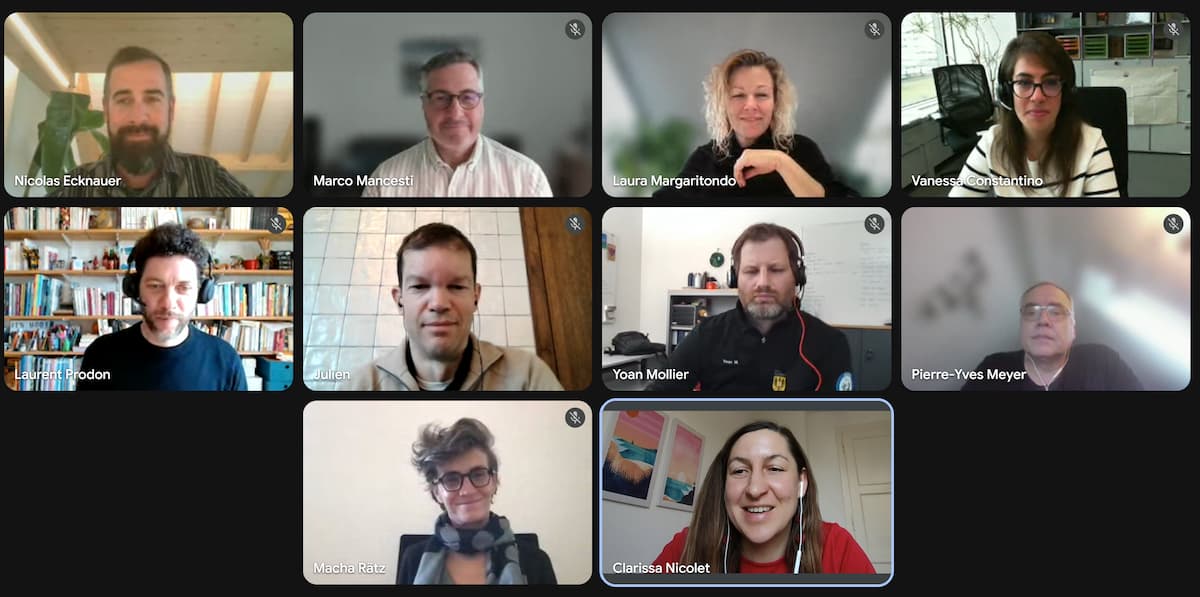
Following Nicolas's sharing, the MeetUp group on February 9, 2026 (pictured below) was invited to interact and discuss the question: “How to move from implicit «human development» to assumed and shared management”? and also “How to keep the flame alive to sustain this type of approach over time?”
Here are some elements that emerged from this exchange:
- The need to consider the integration of new employees into the approach
- The need for regular refreshes
- The idea of an annual meeting > as a regular ritual for the department
- Conduct the TeamScan process for the entire department each year and be able to compare results and developments at different levels (teams, department)
- Work on how the stakes are changing
- Gather employee feedback on the approach and process
A big thank you to you, Nicolas, as well as to the group for your commitment during this interactive MeetUp.
You are invited to join us for our next MeetUps Actitudes® which are open to everyone and free, lasting 60 minutes via video conference every few months.
